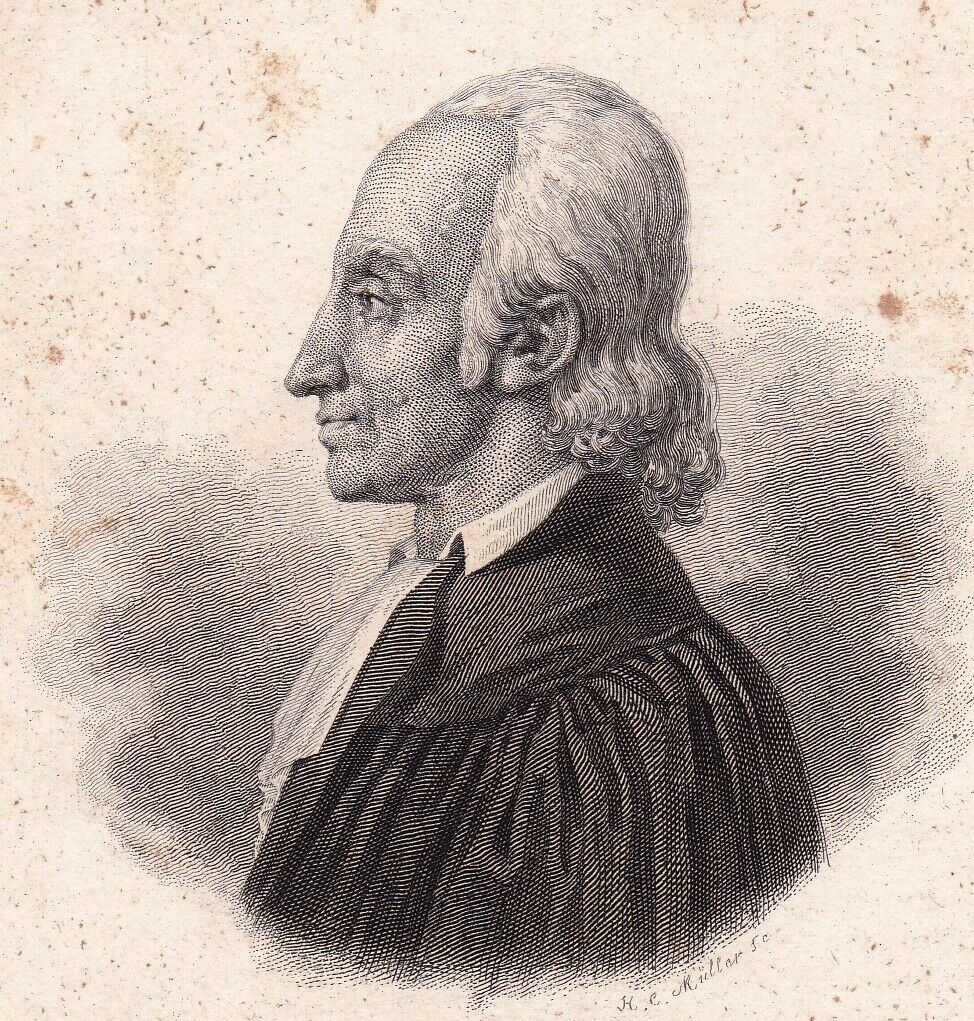
Johann Friedrich Oberlin is well-enough remembered to have an American college and a Japanese university named after him, not to mention countless streets in Alsace and a museum in his old home. But if any saint proves the point that no one can be a saint in isolation—that saintliness is a communal activity—it’s Oberlin. To remember this saint rightly is to bring back to remembrance the other less famous saints surrounding him as well.
It was not Oberlin but Jean-Georges Stuber who was a pioneer in the destitute parish of the Ban de la Roche, or “stone valley,” in a deep and isolated pocket of the Vosges mountains to the west of Strasbourg, France. Though these two pastors arrived more than a century after the Thirty Years’ War, the community still bore the scars of the devastating conflict and had never recovered. No road reached the village of Waldersbach or the other nearby hamlets, and no bridge crossed the fast-flowing Bruche River. The only schoolteacher was a man who had grown too old to look after his pigs anymore. The previous pastor hadn’t seen or used an actual Bible in more than twenty years. The soil was depleted, the yield of the farms was poor, and the people just barely managed not to starve.
Stuber took the post in the Ban de la Roche twice, serving a total of fourteen years, before he finally relented and accepted a more prestigious call to the St. Thomas Church in Strasbourg. He had laid the groundwork for the community’s renewal by finding a better schoolteacher, creating primers to instruct in reading, and preaching repentance and faith in Jesus Christ. But the Ban de la Roche was the last place anybody wanted to go; it was perceived more as a punishment than a parish. In the end, only one man was willing to take such a humiliating call as a worthy way to serve God: Johann Friedrich Oberlin…
Read more


Quisque iaculis facilisis lacinia. Mauris euismod pellentesque tellus sit amet mollis.