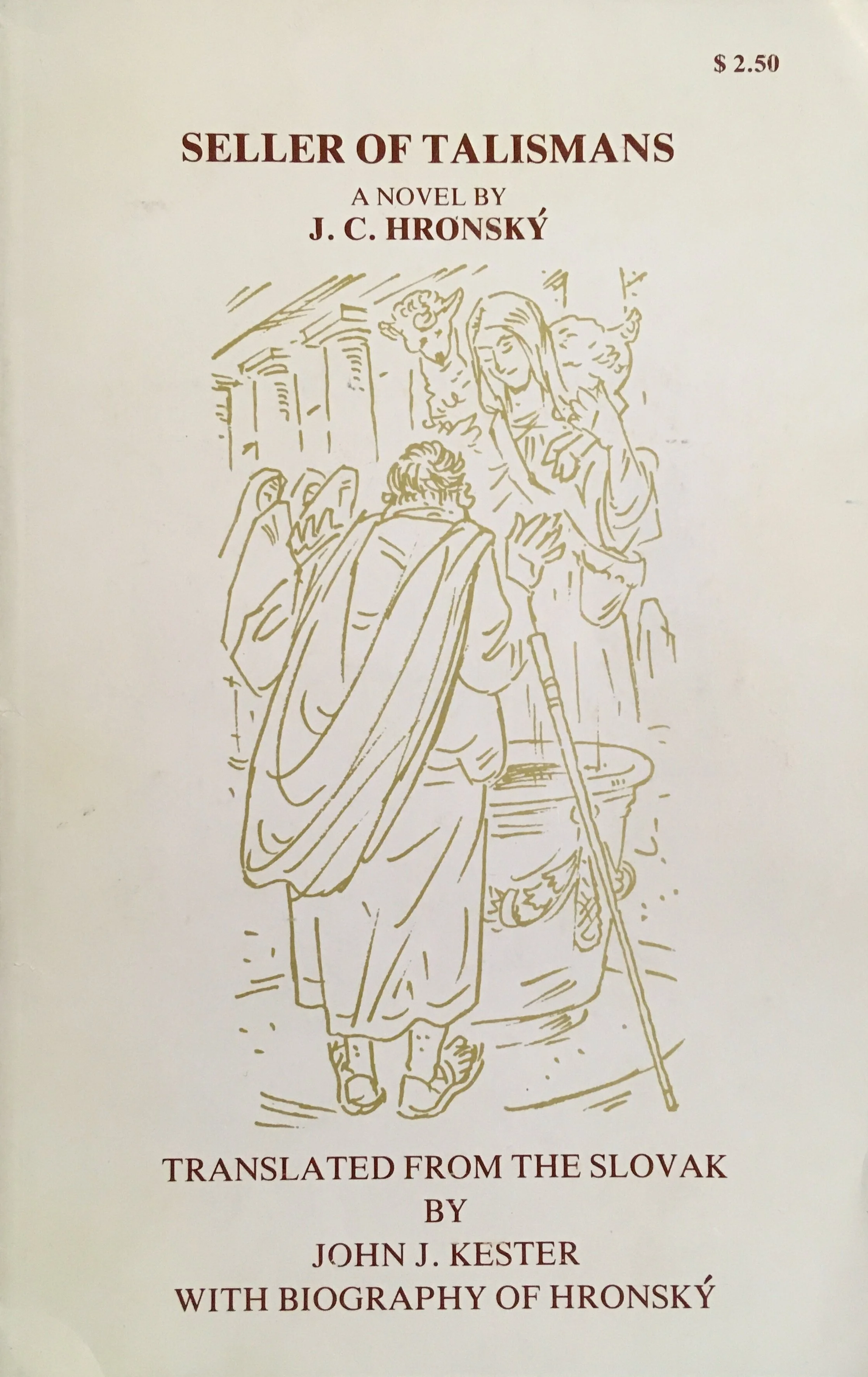
This “novel” doesn’t really add up to a novel, and a prefatory note admits as much: “For reasons of personal security, it has been necessary to present some of the characters under fictional names. The basic structure of the work, however, is factual; only several minor details are imaginary.” In other words, what we have here are 225 pages of reporting of communist atrocities against Slovak Catholics, loosely connected in a structureless narrative. As far as I can tell, it was composed in Slovak but published first in English translation in the United States, with a Slovak edition appearing in 1961 but also only in the U.S.
A structureless narrative recounting atrocities wouldn’t necessarily be the worst thing in the world, even from a literary perspective. Fiction has long served the purpose of telling the world truths that are otherwise too hot to handle, as the translator of this book alludes to by comparing it to Uncle Tom’s Cabin (a gross overstatement, but point taken). Slovakia has long been overlooked on the world stage, and the persecution of the Catholic church—which reached a nasty peak in 1950 and saw huge numbers of imprisonments and tortures especially of priests, monks, and nuns—remains relatively unknown in the annals of communist crime.
Author Jozef Paučo had left his native country in 1945 but kept close ties, which is why he wanted to alert citizens of his new nation as to what horrors were happening behind the Iron Curtain. He seems in retrospect a bit absurdly optimistic that the U.S. would listen and do something about all the Slavs under the Soviet thumb, but you can’t blame him for trying.
However, if it’s going to be lousy as a novel, it has to at least be otherwise spotless in its reporting, and that’s where I have the second and larger problem with this book…
Read more




Quisque iaculis facilisis lacinia. Mauris euismod pellentesque tellus sit amet mollis.