<!DOCTYPE html PUBLIC "-//W3C//DTD XHTML 1.0 Transitional//EN" "http://www.w3.org/TR/xhtml1/DTD/xhtml1-transitional.dtd"><html xmlns="http://www.w3.org/1999/xhtml" xmlns:v="urn:schemas-microsoft-com:vml"><head>
    <title data-ignore-plain-text>Theology &amp;amp; a Recipe: Discerning Walls with Leviticus </title>
    <meta http-equiv="content-type" content="text/html; charset=utf-8">
    <meta name="viewport" content="width=device-width, initial-scale=1.0">
    <meta http-equiv="X-UA-Compatible" content="IE=edge">
    <meta name="format-detection" content="address=no">

    <!--[if (gte mso 9)|(IE)]>
    <style type="text/css" media="screen">
      table {
        border-collapse: collapse;
      }
      li {
        text-indent: -1em;
      }
      v\:* {
        behavior: url(#default#VML);
      }
    </style>
    <![endif]-->

    <style type="text/css" media="all">
      body,
.section-text-area,
.section-text-area-wrapper,
.section-text-cell {
    /* These are technically the same, but use both */
    overflow-wrap: break-word;
    word-wrap: break-word;
    -ms-word-break: break-all;
    word-break: break-word;
}
body {
    width: 100% !important;
    min-width: 100% !important;
    -ms-text-size-adjust: none;
    -webkit-text-size-adjust: none;
    mso-line-height-rule: exactly;
}
@media only screen and (min-width:  594px ) {
    table#newsletter-table {
        border-top: 44px solid #fff !important;
        border-bottom: 44px solid #fff !important;
    }
    table#newsletter-email {
        width: 594px;
    }
    table.footer-section p.footer-company-info,
    table.footer-section p.footer-links,
    table.footer-section p.social-links {
        max-width: 352px;
    }
}
@media only screen and (max-width:  593px ) {
    table#newsletter-table {
        border-top: 22px solid #fff !important;
        border-bottom: 22px solid #fff !important;
    }
    table#newsletter-email {
        width: 414px;
    }
    img.section-scaleable-image {
        width: 100% !important;
        height: auto !important;
    }
    .mobile-only-stacking-cell {
        display: table-cell !important;
    }
    .desktop-only-stacking-cell,
    .horizontal-spacing {
        display: none;
    }
}
@media only screen and (max-width:  413px ) {
    table#newsletter-table {
        border-top: 0px solid #fff !important;
        border-bottom: 0px solid #fff !important;
    }
    table#newsletter-email {
        width: 100%;
    }
}
@media yahoo {
    td {
        -webkit-padding-start: none;
    }
}
span.mail-merge-preview {
    border-bottom: 1px dotted currentColor;
    padding-bottom: .1em;
}
#text-text-section-0 .section-text-area blockquote {
    padding-left: 20px;
    padding-right: 20px;
}
#text-text-section-1 .section-text-area blockquote {
    padding-left: 20px;
    padding-right: 20px;
}
#text-text-section-2 .section-text-area blockquote {
    padding-left: 20px;
    padding-right: 20px;
}
#text-text-section-4 .section-text-area blockquote {
    padding-left: 20px;
    padding-right: 20px;
}
#text-text-section-6 .section-text-area blockquote {
    padding-left: 20px;
    padding-right: 20px;
}
#text-text-section-7 .section-text-area blockquote {
    padding-left: 20px;
    padding-right: 20px;
}

    </style>
    
  </head>
  <body style="font-size:16px;font-weight:normal;width:100%;height:100%;margin:0px;padding:0px;background-color:#fff;">
    <table border="0" cellpadding="0" cellspacing="0" width="100%" align="center" bgcolor="#FFFFFF" id="newsletter-table" style="font-size:16px;font-weight:normal;width:100%;height:100%;margin:0px;padding:0px;border-collapse:collapse;border-spacing:0 !important;border-color:transparent;mso-table-lspace:0pt;mso-table-rspace:0pt;background-color:#fff;border:0px solid #fff;">
  <tbody><tr>
    <td align="center" valign="top" id="newsletter-cell" style="font-size:1em;width:100%;height:100%;margin:0px;padding:0px;border-collapse:collapse;border-spacing:0 !important;border-color:transparent;mso-table-lspace:0pt;mso-table-rspace:0pt;">
      <div data-ignore-plain-text class="newsletter-preview-text" style="color: transparent; display: none !important; height: 0; max-height: 0; max-width: 0; opacity: 0; overflow: hidden; mso-hide: all; visibility: hidden; width: 0;"> $$PLAIN_TEXT_PREVIEW$$</div>
      <div class="gmail-auto-resize-hack" style="mso-hide: all"></div>
      <table border="0" cellpadding="0" cellspacing="0" width="594" id="newsletter-email" style="border-collapse:collapse;border-spacing:0 !important;border-color:transparent;mso-table-lspace:0pt;mso-table-rspace:0pt;border:0px solid #fff;">
        <tbody><tr>
          <td align="center" valign="top" id="newsletter-email-cell" style="border-collapse:collapse;border-spacing:0 !important;border-color:transparent;mso-table-lspace:0pt;mso-table-rspace:0pt;">
            <table border="0" cellpadding="0" cellspacing="0" width="100%" id="newsletter-email-wrapper" style="border-collapse:collapse;border-spacing:0 !important;border-color:transparent;mso-table-lspace:0pt;mso-table-rspace:0pt;">
              <tbody><tr>
                <td align="center" valign="top" class="book-serif" style="border-collapse:collapse;border-spacing:0 !important;border-color:transparent;mso-table-lspace:0pt;mso-table-rspace:0pt;">
                  <table border="0" cellpadding="0" cellspacing="0" width="100%" id="newsletter-section-header" style="width:100%;border-collapse:collapse;border-spacing:0 !important;border-color:transparent;mso-table-lspace:0pt;mso-table-rspace:0pt;">
                    <tbody><tr>
                      <td align="center" valign="middle" id="newsletter-section-header-cell" style="border-collapse:collapse;border-spacing:0 !important;border-color:transparent;mso-table-lspace:0pt;mso-table-rspace:0pt;">
                        
<div id="header-header-section-stacked-top-0">

<table border="0" cellpadding="0" cellspacing="0" width="100%" bgcolor="#FFFFFF" class="section-content header-section header-section-stacked" style="border-collapse:collapse;border-spacing:0 !important;border-color:transparent;mso-table-lspace:0pt;mso-table-rspace:0pt;min-width:100%;width:100%;background-color:#fff;">
  <tbody><tr>
    <td align="center" valign="middle" class="section-content-cell section-text-area" style="border-collapse:collapse;border-spacing:0 !important;border-color:transparent;mso-table-lspace:0pt;mso-table-rspace:0pt;padding-top:22px;padding-right:22px;padding-bottom:22px;padding-left:22px;">


    <a href="https://www.sarahhinlickywilson.com/" style="color:#0e8ac4 !important;"><img class="brand-logo" src="https://static1.squarespace.com/static/58374b5629687ff9ecf3dc40/t/5cedf66f085229ea5bab77fd/1559098994963/Pink+banner.jpg" height="110" style="display:block;border:0;outline:none;text-decoration:none;line-height:0;font-size:0;-ms-interpolation-mode:bicubic;color:#000;height:auto;max-height:110px;max-width:100%;width:auto;"></a>


      <p class="email-title" style="line-height:1.618em;font-weight:normal;margin-bottom:0;font-family:Palatino, Palladio, Baskerville, 'Nimbus Roman No9 L', Garamond, 'Century Schoolbook', serif;font-size:20px;mso-line-height-alt:20px;color:#0e8ac4;white-space:pre-wrap;">vol. 1 no. 3  Fall 2019</p>
      
    </td>
  </tr>
</tbody></table>

</div>
                      </td>
                    </tr>
                  </tbody></table>
                  <table border="0" cellpadding="0" cellspacing="0" width="100%" id="newsletter-section-body" style="width:100%;border-collapse:collapse;border-spacing:0 !important;border-color:transparent;mso-table-lspace:0pt;mso-table-rspace:0pt;">
                    <tbody><tr>
                      <td align="center" valign="top" width="100%" id="newsletter-section-body-cell" style="border-collapse:collapse;border-spacing:0 !important;border-color:transparent;mso-table-lspace:0pt;mso-table-rspace:0pt;">
                        
<div id="text-text-section-0">
<table border="0" cellpadding="0" cellspacing="0" width="100%" bgcolor="#FFFFFF" class="text-section section-content" style="border-collapse:collapse;border-spacing:0 !important;border-color:transparent;mso-table-lspace:0pt;mso-table-rspace:0pt;min-width:100%;width:100%;">
  <tbody><tr>
    <td valign="top" class="section-text-area section-content-cell" style="border-collapse:collapse;border-spacing:0 !important;border-color:transparent;mso-table-lspace:0pt;mso-table-rspace:0pt;padding-top:22px;padding-right:22px;padding-bottom:22px;padding-left:22px;color:#000;background-color:#fff;">
      <h2 style="color:inherit;margin:1.414em 0 .5em;font-weight:400;line-height:1.25em;font-size:2.8271459439999997em;mso-line-height-alt:2.8271459439999997em;margin-top:0;margin-bottom:0;font-family:Palatino, Palladio, Baskerville, 'Nimbus Roman No9 L', Garamond, 'Century Schoolbook', serif;letter-spacing:-.01em;text-align:center;">Discerning Walls<br>with Leviticus</h2>
    </td>
  </tr>
</tbody></table>

</div>
<div id="text-text-section-1">
<table border="0" cellpadding="0" cellspacing="0" width="100%" bgcolor="#FFFFFF" class="text-section section-content" style="border-collapse:collapse;border-spacing:0 !important;border-color:transparent;mso-table-lspace:0pt;mso-table-rspace:0pt;min-width:100%;width:100%;">
  <tbody><tr>
    <td valign="top" class="section-text-area section-content-cell" style="border-collapse:collapse;border-spacing:0 !important;border-color:transparent;mso-table-lspace:0pt;mso-table-rspace:0pt;padding-top:22px;padding-right:22px;padding-bottom:22px;padding-left:22px;color:#000;background-color:#fff;">
      <h4 style="color:inherit;margin:1.414em 0 .5em;font-weight:400;line-height:1.25em;font-size:1.414em;mso-line-height-alt:1.414em;margin-top:0;margin-bottom:0;font-family:Palatino, Palladio, Baskerville, 'Nimbus Roman No9 L', Garamond, 'Century Schoolbook', serif;letter-spacing:.02em;text-align:center;"><em>Recipe: Cold Soup and Hot Quiche</em></h4>
    </td>
  </tr>
</tbody></table>

</div>
<div id="text-text-section-2">
<table border="0" cellpadding="0" cellspacing="0" width="100%" bgcolor="#FFFFFF" class="text-section section-content" style="border-collapse:collapse;border-spacing:0 !important;border-color:transparent;mso-table-lspace:0pt;mso-table-rspace:0pt;min-width:100%;width:100%;">
  <tbody><tr>
    <td valign="top" class="section-text-area section-content-cell" style="border-collapse:collapse;border-spacing:0 !important;border-color:transparent;mso-table-lspace:0pt;mso-table-rspace:0pt;padding-top:22px;padding-right:22px;padding-bottom:22px;padding-left:22px;color:#000;background-color:#fff;">
      <p style="color:inherit;font-size:1em;line-height:1.618em;font-weight:normal;margin-top:0;margin-bottom:0;font-family:Palatino, Palladio, Baskerville, 'Nimbus Roman No9 L', Garamond, 'Century Schoolbook', serif;text-align:center;" class=""><a href="https://drive.google.com/file/d/1B0PToEeLNI7oYdERLeUKP_CKEkXk6eG8/view?usp=sharing" target="" rel="nofollow noopener noreferrer" style="color:#0e8ac4 !important;">download to read as a booklet</a><br>(be sure to print double-sided!)</p>
    </td>
  </tr>
</tbody></table>

</div>
<div id="image-image-section-below-3" style="">
<table border="0" cellpadding="0" cellspacing="0" bgcolor="#FFFFFF" width="100%" class="image-section below-layout section-content" style="border-collapse:collapse;border-spacing:0 !important;border-color:transparent;mso-table-lspace:0pt;mso-table-rspace:0pt;min-width:100%;width:100%;">

  
  <tbody><tr>
    <td class="spacing-above" height="44" colspan="5" style="border-collapse:collapse;border-spacing:0 !important;border-color:transparent;mso-table-lspace:0pt;mso-table-rspace:0pt;"></td>
  </tr>

  
    <tr>
        
      <td align="left" valign="center" class="section-image-cell section-content-cell section-hoverable-image" data-aspect="square" style="border-collapse:collapse;border-spacing:0 !important;border-color:transparent;mso-table-lspace:0pt;mso-table-rspace:0pt;">
        
          <img class="section-scaleable-image" src="https://static1.squarespace.com/static/58374b5629687ff9ecf3dc40/t/5d6a2699f37f2400016a195f/1567237796350/Cold+Soup+Hot+Quiche.jpg" width="594" height="792px" style="display:block;border:0;outline:none;text-decoration:none;line-height:0;font-size:0;background-color:transparent;-ms-interpolation-mode:bicubic;height:auto;width:100%;max-width:100%;">
        
      </td>
        
    </tr>


  <tr>
    <td class="spacing-below" height="44" colspan="5" style="border-collapse:collapse;border-spacing:0 !important;border-color:transparent;mso-table-lspace:0pt;mso-table-rspace:0pt;"></td>
  </tr>


</tbody></table>

</div>
<div id="text-text-section-4">
<table border="0" cellpadding="0" cellspacing="0" width="100%" bgcolor="#FFFFFF" class="text-section section-content" style="border-collapse:collapse;border-spacing:0 !important;border-color:transparent;mso-table-lspace:0pt;mso-table-rspace:0pt;min-width:100%;width:100%;">
  <tbody><tr>
    <td valign="top" class="section-text-area section-content-cell" style="border-collapse:collapse;border-spacing:0 !important;border-color:transparent;mso-table-lspace:0pt;mso-table-rspace:0pt;padding-top:22px;padding-right:22px;padding-bottom:22px;padding-left:22px;color:#000;background-color:#fff;">
      <h3 style="color:inherit;margin:1.414em 0 .5em;font-weight:400;line-height:1.25em;font-size:1.9993959999999997em;mso-line-height-alt:1.9993959999999997em;margin-top:0;font-family:Palatino, Palladio, Baskerville, 'Nimbus Roman No9 L', Garamond, 'Century Schoolbook', serif;letter-spacing:0em;"><strong>Leviticus Is Not</strong></h3><p class="" style="color:inherit;margin-bottom:1.25em;font-size:1em;line-height:1.618em;font-weight:normal;font-family:Palatino, Palladio, Baskerville, 'Nimbus Roman No9 L', Garamond, 'Century Schoolbook', serif;">Leviticus is not the most popular book of the Bible.</p><p class="" style="color:inherit;margin-bottom:1.25em;font-size:1em;line-height:1.618em;font-weight:normal;font-family:Palatino, Palladio, Baskerville, 'Nimbus Roman No9 L', Garamond, 'Century Schoolbook', serif;">It is, if anything, the most ignored, neglected, sidelined, and generally despised. Which is unfair: <a href="https://tinyurl.com/y65vfcck" rel="nofollow" style="color:#0e8ac4 !important;">Joshua</a> ought to earn that distinction.</p><p class="" style="color:inherit;margin-bottom:1.25em;font-size:1em;line-height:1.618em;font-weight:normal;font-family:Palatino, Palladio, Baskerville, 'Nimbus Roman No9 L', Garamond, 'Century Schoolbook', serif;">The simple problem is that a twenty-first-century audience of mainly Gentile Christian readers finds the thought-forms of Leviticus impenetrably alien. When we take it up now, we can’t help but impose all sorts of equally alien perspectives on it.</p><p class="" style="color:inherit;margin-bottom:1.25em;font-size:1em;line-height:1.618em;font-weight:normal;font-family:Palatino, Palladio, Baskerville, 'Nimbus Roman No9 L', Garamond, 'Century Schoolbook', serif;">If we’ve any hope of regarding Leviticus as holy Scripture, the first step is to clear away the clutter and figure out what it’s <em>not</em>.</p><p class="" style="color:inherit;margin-bottom:1.25em;font-size:1em;line-height:1.618em;font-weight:normal;font-family:Palatino, Palladio, Baskerville, 'Nimbus Roman No9 L', Garamond, 'Century Schoolbook', serif;">So, first of all, Leviticus is not primarily a book of laws. Yes, there are laws; but laws are all over the Scripture, even in books we don’t normally associate with them. Whereas Leviticus “is characterised by the extreme infrequency of imperatives… a total of 42 occurrences, corresponding to 35 per ten thousand words… Most books of the Bible have three or four times as many imperatives per ten thousand words as Leviticus.”</p><p class="" style="color:inherit;margin-bottom:1.25em;font-size:1em;line-height:1.618em;font-weight:normal;font-family:Palatino, Palladio, Baskerville, 'Nimbus Roman No9 L', Garamond, 'Century Schoolbook', serif;">If Leviticus is not primarily a catalog of defunct laws, even less so is it a health-and-safety handbook. Popular as theories are that Leviticus tried to protect ancient innocents from trichinosis in a world without chlorine or hand soap, they don’t hold up to scrutiny. Leviticus is highly selective in the kinds of illnesses it concerns itself with. If hygiene were its main purpose, the Israelites wouldn’t have made it out of the wilderness—not on account of idolatry or poisonous snakes, but dysentery.</p><p class="" style="color:inherit;margin-bottom:1.25em;font-size:1em;line-height:1.618em;font-weight:normal;font-family:Palatino, Palladio, Baskerville, 'Nimbus Roman No9 L', Garamond, 'Century Schoolbook', serif;">And for the love of God, Leviticus is <em>not</em> a primitive, savage portrait of a vengeful local deity Who delights in seeing one eye gouged out to compensate for another, or Who stones malefactors to keep otherwise freedom-loving individuals in a terrified state of subservience, or Who bloodthirstily snorts up the scent of the roasting flesh of His designated clean animals while contradictorily declaring the rest of His creation abominable.</p><h3 style="color:inherit;margin:1.414em 0 .5em;font-weight:400;line-height:1.25em;font-size:1.9993959999999997em;mso-line-height-alt:1.9993959999999997em;font-family:Palatino, Palladio, Baskerville, 'Nimbus Roman No9 L', Garamond, 'Century Schoolbook', serif;letter-spacing:0em;"><strong>Leviticus Is</strong></h3><p class="" style="color:inherit;margin-bottom:1.25em;font-size:1em;line-height:1.618em;font-weight:normal;font-family:Palatino, Palladio, Baskerville, 'Nimbus Roman No9 L', Garamond, 'Century Schoolbook', serif;">Leviticus is a portrait of reality. But it doesn’t portray reality in the same ways as a pluralistic, scientific culture like ours that zeroes in on causality and repeatable results.</p><p class="" style="color:inherit;margin-bottom:1.25em;font-size:1em;line-height:1.618em;font-weight:normal;font-family:Palatino, Palladio, Baskerville, 'Nimbus Roman No9 L', Garamond, 'Century Schoolbook', serif;">Instead, Leviticus thinks aesthetically. It notices how things are arranged, how they relate to each other, mirrors reflecting and echoes reverberating all the way up and all the way down.</p><p class="" style="color:inherit;margin-bottom:1.25em;font-size:1em;line-height:1.618em;font-weight:normal;font-family:Palatino, Palladio, Baskerville, 'Nimbus Roman No9 L', Garamond, 'Century Schoolbook', serif;">Leviticus sees Mt. Sinai in the tabernacle, and the tabernacle in the body of the animal sacrifice, and all three in the text of Leviticus itself: a rhyming stack of reality. Leviticus notices contrasting pairs—male and female, clean and unclean, Israelite and sojourner, covenanted and free, perfect and imperfect—not to prefer one over the other, but to grasp how each is God’s.</p><p class="" style="color:inherit;margin-bottom:1.25em;font-size:1em;line-height:1.618em;font-weight:normal;font-family:Palatino, Palladio, Baskerville, 'Nimbus Roman No9 L', Garamond, 'Century Schoolbook', serif;">Even if we don’t tend to rate it highly or choose it explicitly, we still employ this kind of aesthetic reasoning nowadays. Think of a table setting: why is the fork on the left while the knife and spoon sit on the right? Why the colors in that precise order on a stoplight? Why do we take such care in selecting the seating at a wedding dinner, or in arranging sheets, blankets, and pillows on a bed?</p><p class="" style="color:inherit;margin-bottom:1.25em;font-size:1em;line-height:1.618em;font-weight:normal;font-family:Palatino, Palladio, Baskerville, 'Nimbus Roman No9 L', Garamond, 'Century Schoolbook', serif;">You could trace the origins of these arrangements, but that wouldn’t explain the satisfaction and smoothness they lend to the living of life. You certainly wouldn’t insist that any given arrangement is morally right or culturally superior.</p><p class="" style="color:inherit;margin-bottom:1.25em;font-size:1em;line-height:1.618em;font-weight:normal;font-family:Palatino, Palladio, Baskerville, 'Nimbus Roman No9 L', Garamond, 'Century Schoolbook', serif;">But you would have to admit how satisfying on the soul-level it is to behold something just so and just right: a garden, whether manicured or artfully wild; buildings as different as Gothic cathedrals and octagonal barns exemplifying their purpose with grace; a good story that surprises even as it meets all our expectations, drawing us neatly from the beginning through the middle to the end; the mathematically precise use and reuse of themes in a fugue.</p><p class="" style="color:inherit;margin-bottom:1.25em;font-size:1em;line-height:1.618em;font-weight:normal;font-family:Palatino, Palladio, Baskerville, 'Nimbus Roman No9 L', Garamond, 'Century Schoolbook', serif;">It’s on this level that Leviticus operates, arranging the beings and objects of God’s creation in a pleasing harmony by means of rules and instructions, and precisely in this way teaching its larger lessons “about the mightiness of God, the vulnerability of living beings, their weakness, their evil tendency to oppress each other, human predatoriness, the covenant with God, his protection in return for obedience.”</p><p class="" style="color:inherit;margin-bottom:1.25em;font-size:1em;line-height:1.618em;font-weight:normal;font-family:Palatino, Palladio, Baskerville, 'Nimbus Roman No9 L', Garamond, 'Century Schoolbook', serif;">The entire purpose of Leviticus is the entire purpose of life under God: to come to terms with being a creature—vulnerable, subjected, ensouled matter set in the midst of other living and material things, on the brink of death, longing for life.</p><h3 style="color:inherit;margin:1.414em 0 .5em;font-weight:400;line-height:1.25em;font-size:1.9993959999999997em;mso-line-height-alt:1.9993959999999997em;font-family:Palatino, Palladio, Baskerville, 'Nimbus Roman No9 L', Garamond, 'Century Schoolbook', serif;letter-spacing:0em;"><strong>The Problem of Walls</strong></h3><p class="" style="color:inherit;margin-bottom:1.25em;font-size:1em;line-height:1.618em;font-weight:normal;font-family:Palatino, Palladio, Baskerville, 'Nimbus Roman No9 L', Garamond, 'Century Schoolbook', serif;">Here’s a test case for thinking through creaturely existence in the light of Leviticus: walls.</p><p class="" style="color:inherit;margin-bottom:1.25em;font-size:1em;line-height:1.618em;font-weight:normal;font-family:Palatino, Palladio, Baskerville, 'Nimbus Roman No9 L', Garamond, 'Century Schoolbook', serif;">When I think of walls, as a general category of things, the associations elicited are oppression and horror. And with good reason. In my childhood there was one single iconic wall: the Berlin Wall. It stood, and it stood for nothing good. Crossing it meant liability to death; staying obediently on one side or the other meant deference to hostility, hatred, and endless enmity. The one thing to hope for in the uncertain course of history was the end of that wall.</p><p class="" style="color:inherit;margin-bottom:1.25em;font-size:1em;line-height:1.618em;font-weight:normal;font-family:Palatino, Palladio, Baskerville, 'Nimbus Roman No9 L', Garamond, 'Century Schoolbook', serif;">And the day came: I remember well the tears on the faces around me as we watched the enthusiastic crowds tearing down that hated wall.</p><p class="" style="color:inherit;margin-bottom:1.25em;font-size:1em;line-height:1.618em;font-weight:normal;font-family:Palatino, Palladio, Baskerville, 'Nimbus Roman No9 L', Garamond, 'Century Schoolbook', serif;">No one loves the Berlin Wall anymore. But other walls still stand, attracting both defenders and detractors, and their dispute itself is a wall, threatening to become as absolute and deadly as the Berlin Wall.</p><p class="" style="color:inherit;margin-bottom:1.25em;font-size:1em;line-height:1.618em;font-weight:normal;font-family:Palatino, Palladio, Baskerville, 'Nimbus Roman No9 L', Garamond, 'Century Schoolbook', serif;">The Israeli West Bank barrier is called a “separation wall” necessary as a security measure by one side and a “wall of apartheid” by the other. Throughout Northern Ireland stand walls erected to limit violence between Catholics and Protestants, and they did succeed in reducing the bloodshed—all the while maintaining the rightness of segregation and further segregating those who live at their interface, even now in a period of relative peace. How do you judge a wall that both limits and fosters hostilities?</p><p class="" style="color:inherit;margin-bottom:1.25em;font-size:1em;line-height:1.618em;font-weight:normal;font-family:Palatino, Palladio, Baskerville, 'Nimbus Roman No9 L', Garamond, 'Century Schoolbook', serif;">Today there are prospects to extend the sections of wall already built between the United States and Mexico. Some cheer on the maintenance of national integrity, others decry the criminalization of non-citizens, and the result is families and communities split down the middle both literally and ideologically.</p><p class="" style="color:inherit;margin-bottom:1.25em;font-size:1em;line-height:1.618em;font-weight:normal;font-family:Palatino, Palladio, Baskerville, 'Nimbus Roman No9 L', Garamond, 'Century Schoolbook', serif;">For myself, I don’t like any of these walls. But it is telling that when I think of walls, I immediately think in political and national terms.</p><p class="" style="color:inherit;margin-bottom:1.25em;font-size:1em;line-height:1.618em;font-weight:normal;font-family:Palatino, Palladio, Baskerville, 'Nimbus Roman No9 L', Garamond, 'Century Schoolbook', serif;">But there are other ways to think about walls, and other ways to do them.</p><h3 style="color:inherit;margin:1.414em 0 .5em;font-weight:400;line-height:1.25em;font-size:1.9993959999999997em;mso-line-height-alt:1.9993959999999997em;font-family:Palatino, Palladio, Baskerville, 'Nimbus Roman No9 L', Garamond, 'Century Schoolbook', serif;letter-spacing:0em;"><strong>Walls at the Origin of Life</strong></h3><p class="" style="color:inherit;margin-bottom:1.25em;font-size:1em;line-height:1.618em;font-weight:normal;font-family:Palatino, Palladio, Baskerville, 'Nimbus Roman No9 L', Garamond, 'Century Schoolbook', serif;">It came to me while I was out for a walk, listening to a BBC science podcast about <a href="https://tinyurl.com/y6xwtsmg" rel="nofollow" style="color:#0e8ac4 !important;">the cell</a>. The cell is the <em>sine qua non</em> of life, and the necessary building block of the larger and more complex forms of life that are algae, fungi, plants, and animals. But this is so for two apparently mutually exclusive reasons.</p><p class="" style="color:inherit;margin-bottom:1.25em;font-size:1em;line-height:1.618em;font-weight:normal;font-family:Palatino, Palladio, Baskerville, 'Nimbus Roman No9 L', Garamond, 'Century Schoolbook', serif;">The first reason: the cell is surrounded by a wall. To live at all is to have a wall, a distinction between this particular life and everything else. As one of the scientists on the program put it, “Life is a little patch of order, or little patches of order, in a sea of chaos, and everything tends toward chaos. The membrane is what made life, really, because it’s like a dam across a river.” The membrane keeps <em>in</em> all the things that make the cell itself—the DNA and the organelles and the cytoplasm—and keeps everything else <em>out</em>.</p><p class="" style="color:inherit;margin-bottom:1.25em;font-size:1em;line-height:1.618em;font-weight:normal;font-family:Palatino, Palladio, Baskerville, 'Nimbus Roman No9 L', Garamond, 'Century Schoolbook', serif;">For a billion or so years, that’s all life was. A blob of sticky genetic goo with a membrane around it. And then, <em>exactly once</em>, something astounding happened.</p><p class="" style="color:inherit;margin-bottom:1.25em;font-size:1em;line-height:1.618em;font-weight:normal;font-family:Palatino, Palladio, Baskerville, 'Nimbus Roman No9 L', Garamond, 'Century Schoolbook', serif;">One cell let another cell inside its wall… and they both survived.</p><p class="" style="color:inherit;margin-bottom:1.25em;font-size:1em;line-height:1.618em;font-weight:normal;font-family:Palatino, Palladio, Baskerville, 'Nimbus Roman No9 L', Garamond, 'Century Schoolbook', serif;">Every living alga, fungus, plant, and animal on earth is heir to this unique, unprecedented, and unrepeated event. The swallowing cell is the <em>you</em> part of you. The swallowed cell is the mitochondrial squatter inside every one of your you-cells, possessing a unique genome, offering you a huge upgrade in energy efficiency in return for shelter. You couldn’t be the size you are—nothing, in fact, could manage to be more than one cell big—without the symbiosis between swallower and swallowed.</p><p class="" style="color:inherit;margin-bottom:1.25em;font-size:1em;line-height:1.618em;font-weight:normal;font-family:Palatino, Palladio, Baskerville, 'Nimbus Roman No9 L', Garamond, 'Century Schoolbook', serif;">Thus the second reason for the cell: its wall being breached led to an explosion in the diversity, size, and complexity of life.</p><p class="" style="color:inherit;margin-bottom:1.25em;font-size:1em;line-height:1.618em;font-weight:normal;font-family:Palatino, Palladio, Baskerville, 'Nimbus Roman No9 L', Garamond, 'Century Schoolbook', serif;">On hearing this, I actually shouted out loud, “It’s just like in Leviticus!” That may just be the first (or only) time that Leviticus and microbiology shook hands.</p><h3 style="color:inherit;margin:1.414em 0 .5em;font-weight:400;line-height:1.25em;font-size:1.9993959999999997em;mso-line-height-alt:1.9993959999999997em;font-family:Palatino, Palladio, Baskerville, 'Nimbus Roman No9 L', Garamond, 'Century Schoolbook', serif;letter-spacing:0em;"><strong>The Problem of Wall-lessness</strong></h3><p class="" style="color:inherit;margin-bottom:1.25em;font-size:1em;line-height:1.618em;font-weight:normal;font-family:Palatino, Palladio, Baskerville, 'Nimbus Roman No9 L', Garamond, 'Century Schoolbook', serif;">Leviticus hearkens back to the first creative act in Genesis 1: God separated the light from the darkness, God separated the waters above and below the firmament, God separated the land from the sea.</p><p class="" style="color:inherit;margin-bottom:1.25em;font-size:1em;line-height:1.618em;font-weight:normal;font-family:Palatino, Palladio, Baskerville, 'Nimbus Roman No9 L', Garamond, 'Century Schoolbook', serif;">Nix the separations, and you return to the primordial chaos. If walls are the <em>sine qua non</em> of life, then pure wall-lessness is no solution. A ruptured membrane equals a dead cell. A ruptured skin signals death near at hand.</p><p class="" style="color:inherit;margin-bottom:1.25em;font-size:1em;line-height:1.618em;font-weight:normal;font-family:Palatino, Palladio, Baskerville, 'Nimbus Roman No9 L', Garamond, 'Century Schoolbook', serif;">That’s what Leviticus’s “leprosy” laws in chs. 14 and 15 are about. The symptoms described therein don’t correlate to actual leprosy (Hansen’s disease) and possibly not to any other known dermatitis, either.</p><p class="" style="color:inherit;margin-bottom:1.25em;font-size:1em;line-height:1.618em;font-weight:normal;font-family:Palatino, Palladio, Baskerville, 'Nimbus Roman No9 L', Garamond, 'Century Schoolbook', serif;">The issue is the issue: what is supposed to stay inside, keeping your human body alive and functioning, is leaking out. The membrane demarcating your personhood from all other beings is fluctuating to the point of nonexistence. Which means you are on the brink of nonexistence.</p><p class="" style="color:inherit;margin-bottom:1.25em;font-size:1em;line-height:1.618em;font-weight:normal;font-family:Palatino, Palladio, Baskerville, 'Nimbus Roman No9 L', Garamond, 'Century Schoolbook', serif;">The laws regarding leprosy and the corresponding rite of cleansing are Levitical language for the assertion that <em>you are your skin</em>. It is the bodily limit between you and not-you. What is violence but the refusal of another to acknowledge your skin and the impermissibility of trespassing beyond it? And what, by contrast, is intimacy but the free invitation to cross the boundary of skin, a blurring of the boundaries into one flesh so extraordinary that a new and unique skin—a new and unique human life—may well result?</p><p class="" style="color:inherit;margin-bottom:1.25em;font-size:1em;line-height:1.618em;font-weight:normal;font-family:Palatino, Palladio, Baskerville, 'Nimbus Roman No9 L', Garamond, 'Century Schoolbook', serif;">The ethical evil in the first case and the ethical good in the second are both consequences of the metaphysical magic of the wall: a barrier, but not an absolute one, whose passage may be crime and may be love.</p><p class="" style="color:inherit;margin-bottom:1.25em;font-size:1em;line-height:1.618em;font-weight:normal;font-family:Palatino, Palladio, Baskerville, 'Nimbus Roman No9 L', Garamond, 'Century Schoolbook', serif;">The skin is such a miraculous thing in Leviticus that its healing after “leprosy” is performed with a rite that parallels the ordination of a priest. The blurry boundary of compromised skin warns that what should be set apart is not anymore—and set-apartness is the fundamental meaning of holiness. So when a sufferer is healed, she is set apart doubly, by her renewed skin and by her anointing. She is holy as she was not before her skin came under attack.</p><p class="" style="color:inherit;margin-bottom:1.25em;font-size:1em;line-height:1.618em;font-weight:normal;font-family:Palatino, Palladio, Baskerville, 'Nimbus Roman No9 L', Garamond, 'Century Schoolbook', serif;">Leviticus thinks in nested constructions and makes its points by how-much-more repetitions, so the next step from the skin is the garment, and from the garment, the house. Who ever heard of a shirt getting leprosy? or a house? Stains and mildew are one thing, but the Levitical concern lies elsewhere. To be human is to need shelter around your clothed body. All three need to be intact if you are to live.</p><p class="" style="color:inherit;margin-bottom:1.25em;font-size:1em;line-height:1.618em;font-weight:normal;font-family:Palatino, Palladio, Baskerville, 'Nimbus Roman No9 L', Garamond, 'Century Schoolbook', serif;">This, then, is the question to pose to any wall, membrane, or cover: is this wall in the nature of a biological cell, one that fosters life? or is it in the nature of a prison cell, one that imposes death? It’s telling of the ambiguity of walls that the English term “cell” can suggest either extreme.</p><p class="" style="color:inherit;margin-bottom:1.25em;font-size:1em;line-height:1.618em;font-weight:normal;font-family:Palatino, Palladio, Baskerville, 'Nimbus Roman No9 L', Garamond, 'Century Schoolbook', serif;">A lived-in house is not an airtight chamber. Safety from intruders and thunderstorms is a necessity, of course, or it fails to be a shelter at all. But without windows and doors, a house is only a tomb.</p><h3 style="color:inherit;margin:1.414em 0 .5em;font-weight:400;line-height:1.25em;font-size:1.9993959999999997em;mso-line-height-alt:1.9993959999999997em;font-family:Palatino, Palladio, Baskerville, 'Nimbus Roman No9 L', Garamond, 'Century Schoolbook', serif;letter-spacing:0em;"><strong>Walls with and without Doors</strong></h3><p class="" style="color:inherit;margin-bottom:1.25em;font-size:1em;line-height:1.618em;font-weight:normal;font-family:Palatino, Palladio, Baskerville, 'Nimbus Roman No9 L', Garamond, 'Century Schoolbook', serif;">Leviticus calls for a further discernment of walls. Skin, garments, and houses allow for movement in and out, as long as they remain intact, scrubbed of chaos and decay, and the passage is authorized. There are other walls like this.</p><p class="" style="color:inherit;margin-bottom:1.25em;font-size:1em;line-height:1.618em;font-weight:normal;font-family:Palatino, Palladio, Baskerville, 'Nimbus Roman No9 L', Garamond, 'Century Schoolbook', serif;">Mt. Sinai is the icon-of-icons when it comes to selectively passable walls. The people are permitted to gather around its feet, but they cannot transgress to the middle section where Aaron and the priests and elders may go. Moses alone may ascend to the summit where the Lord is enthroned.</p><p class="" style="color:inherit;margin-bottom:1.25em;font-size:1em;line-height:1.618em;font-weight:normal;font-family:Palatino, Palladio, Baskerville, 'Nimbus Roman No9 L', Garamond, 'Century Schoolbook', serif;">The pattern of impeded access repeats itself in the tabernacle: the outer region for all the people of Israel, properly cleansed and atoned for; the middle region for the priests; and at the innermost chamber the holy-of-holies, only for the high priest and only on the holiest day of the year. The walls within are a gift of protection to the people. God’s holiness is a force to be reckoned with, <em>the </em>force to be reckoned with; no one can look on God’s face and live.</p><p class="" style="color:inherit;margin-bottom:1.25em;font-size:1em;line-height:1.618em;font-weight:normal;font-family:Palatino, Palladio, Baskerville, 'Nimbus Roman No9 L', Garamond, 'Century Schoolbook', serif;">The pattern repeats again in the book of Leviticus itself. Chapter by chapter, it draws you closer to the covenantal center of Israel’s life with God. You dare not jump right to the middle; you are not ready yet. Presumptions are warned off with two dire stories of blasphemy and consequent death in Leviticus 10 and 24. You may, in time, pass through these walls of protection—but only by God’s prevenient mercy in atoning for you.</p><p class="" style="color:inherit;margin-bottom:1.25em;font-size:1em;line-height:1.618em;font-weight:normal;font-family:Palatino, Palladio, Baskerville, 'Nimbus Roman No9 L', Garamond, 'Century Schoolbook', serif;">What is astounding is that the walls between us and God <em>can</em> be crossed, with God’s preparation and permission, yet other walls never can be. Israel may not cross the wall impeding traffic with idols, the dead, or sorcery. To do so is religious leprosy, a case of unchecked spiritual oozing. The life-giving limit is for our salvation. Crossing that wall is not an exercise of freedom but a vote for death, choosing chaos over shelter.</p><p class="" style="color:inherit;margin-bottom:1.25em;font-size:1em;line-height:1.618em;font-weight:normal;font-family:Palatino, Palladio, Baskerville, 'Nimbus Roman No9 L', Garamond, 'Century Schoolbook', serif;">Such an undoored wall against idolatry is for our good. But as it turns out, we are not the only creatures under God’s protection and care. Israel is forbidden from taking the life of innumerable animal species. Usually mistranslated “detestable” or “abominable,” the word rather indicates simply “off limits.”</p><p class="" style="color:inherit;margin-bottom:1.25em;font-size:1em;line-height:1.618em;font-weight:normal;font-family:Palatino, Palladio, Baskerville, 'Nimbus Roman No9 L', Garamond, 'Century Schoolbook', serif;">There is a wall around nearly all of the animal kingdom—to protect <em>their</em> lives from us. Only a small handful of animals is given to Israel to eat, and those only upon approaching the holy walls of the tabernacle. A dispensation must be given by God in each and every case that an animal life is taken to support human life.</p><h3 style="color:inherit;margin:1.414em 0 .5em;font-weight:400;line-height:1.25em;font-size:1.9993959999999997em;mso-line-height-alt:1.9993959999999997em;font-family:Palatino, Palladio, Baskerville, 'Nimbus Roman No9 L', Garamond, 'Century Schoolbook', serif;letter-spacing:0em;"><strong>We Will Look on Him<br>Whom We Have Pierced</strong></h3><p class="" style="color:inherit;margin-bottom:1.25em;font-size:1em;line-height:1.618em;font-weight:normal;font-family:Palatino, Palladio, Baskerville, 'Nimbus Roman No9 L', Garamond, 'Century Schoolbook', serif;">Bad Gentile habits of reading the Old Testament have inclined Christians to think that Jesus is all about the prophets and all against Leviticus and associated laws. Those roots go so deep as to be nearly impossible to pluck up, but let’s weed at least one corner of our vineyard and recognize that Leviticus provides the conceptual building blocks—the living cells—that comprise the possibilities of salvation in the New Testament: sacrifice, blood, atonement, jubilee, redemption, holiness.</p><p class="" style="color:inherit;margin-bottom:1.25em;font-size:1em;line-height:1.618em;font-weight:normal;font-family:Palatino, Palladio, Baskerville, 'Nimbus Roman No9 L', Garamond, 'Century Schoolbook', serif;">And to talk about these things in the New Testament, we have to talk about walls. Especially the wall that is the skin.</p><p class="" style="color:inherit;margin-bottom:1.25em;font-size:1em;line-height:1.618em;font-weight:normal;font-family:Palatino, Palladio, Baskerville, 'Nimbus Roman No9 L', Garamond, 'Century Schoolbook', serif;">It is the central image of the Gospels: Jesus’ pierced body. The point of the piercing is to drain the life of out of him—so the evildoers intend. But the destruction of the boundary between Jesus and death inverts the curse.</p><p class="" style="color:inherit;margin-bottom:1.25em;font-size:1em;line-height:1.618em;font-weight:normal;font-family:Palatino, Palladio, Baskerville, 'Nimbus Roman No9 L', Garamond, 'Century Schoolbook', serif;">Blood and water flow out of his pierced side and, as so often depicted in Christian iconography, a eucharistic chalice catches the flow. In worship of the crucified Lord, bread and wine will be set apart from all other bread and wine, a wall; but this is divinely authorized in order to blur the boundary between human food and divine body.</p><p class="" style="color:inherit;margin-bottom:1.25em;font-size:1em;line-height:1.618em;font-weight:normal;font-family:Palatino, Palladio, Baskerville, 'Nimbus Roman No9 L', Garamond, 'Century Schoolbook', serif;">And when the pierced body is raised up, living beyond the reach of chaos and death, it nevertheless displays the scars of its encounter. The sufferer is anointed by resurrection to become our great high priest.</p><p class="" style="color:inherit;margin-bottom:1.25em;font-size:1em;line-height:1.618em;font-weight:normal;font-family:Palatino, Palladio, Baskerville, 'Nimbus Roman No9 L', Garamond, 'Century Schoolbook', serif;">In the piercing and raising of Jesus’ body, another wall is surmounted. Ephesians 2 admonishes Gentile believers: “Remember that you were at that time separated from Christ, alienated from the commonwealth of Israel and strangers to the covenants of promise, having no hope and without God in the world. But now in Christ Jesus you who once were far off have been brought near by the blood of Christ. For he himself is our peace, who has made us both one and has broken down in his flesh the dividing wall of hostility.”</p><p class="" style="color:inherit;margin-bottom:1.25em;font-size:1em;line-height:1.618em;font-weight:normal;font-family:Palatino, Palladio, Baskerville, 'Nimbus Roman No9 L', Garamond, 'Century Schoolbook', serif;">There are walls that give rise to life, and there are walls that engender hostility. The incarnate Son alone can assume into his own body the latter walls and so destroy them. He alone can bless the walls that make us each his distinct and precious creatures so that they serve love and life, not death.</p><p class="" style="color:inherit;margin-bottom:1.25em;font-size:1em;line-height:1.618em;font-weight:normal;font-family:Palatino, Palladio, Baskerville, 'Nimbus Roman No9 L', Garamond, 'Century Schoolbook', serif;">How else should it happen? In taking on human flesh, Christ was already transgressing a wall, coming down from the peak of Sinai. It was his prerogative alone, and so also the cost. The cost was the sacrifice, and what it bought was a new shelter of atonement over all sins. Even wall sins.</p><p class="" style="color:inherit;margin-bottom:1.25em;font-size:1em;line-height:1.618em;font-weight:normal;font-family:Palatino, Palladio, Baskerville, 'Nimbus Roman No9 L', Garamond, 'Century Schoolbook', serif;">A strange way to unite the divided human race!</p><p class="" style="color:inherit;font-size:1em;line-height:1.618em;font-weight:normal;margin-bottom:0;font-family:Palatino, Palladio, Baskerville, 'Nimbus Roman No9 L', Garamond, 'Century Schoolbook', serif;">But Leviticus, at least, saw it coming.</p>
    </td>
  </tr>
</tbody></table>

</div>
<div id="image-image-section-below-5" style="">
<table border="0" cellpadding="0" cellspacing="0" bgcolor="#FFFFFF" width="100%" class="image-section below-layout section-content" style="border-collapse:collapse;border-spacing:0 !important;border-color:transparent;mso-table-lspace:0pt;mso-table-rspace:0pt;min-width:100%;width:100%;">

  
  <tbody><tr>
    <td class="spacing-above" height="44" colspan="5" style="border-collapse:collapse;border-spacing:0 !important;border-color:transparent;mso-table-lspace:0pt;mso-table-rspace:0pt;"></td>
  </tr>

  
    <tr>
        
      <td align="left" valign="center" class="section-image-cell section-content-cell section-hoverable-image" data-aspect="square" style="border-collapse:collapse;border-spacing:0 !important;border-color:transparent;mso-table-lspace:0pt;mso-table-rspace:0pt;">
        
          <img class="section-scaleable-image" src="https://static1.squarespace.com/static/58374b5629687ff9ecf3dc40/t/5d6a2819c6d4390001443cd4/1567238183957/Cold+Soup+Hot+Quiche+2.jpg" width="594" height="792px" style="display:block;border:0;outline:none;text-decoration:none;line-height:0;font-size:0;background-color:transparent;-ms-interpolation-mode:bicubic;height:auto;width:100%;max-width:100%;">
        
      </td>
        
    </tr>


  <tr>
    <td class="spacing-below" height="44" colspan="5" style="border-collapse:collapse;border-spacing:0 !important;border-color:transparent;mso-table-lspace:0pt;mso-table-rspace:0pt;"></td>
  </tr>


</tbody></table>

</div>
<div id="text-text-section-6">
<table border="0" cellpadding="0" cellspacing="0" width="100%" bgcolor="#FFFFFF" class="text-section section-content" style="border-collapse:collapse;border-spacing:0 !important;border-color:transparent;mso-table-lspace:0pt;mso-table-rspace:0pt;min-width:100%;width:100%;">
  <tbody><tr>
    <td valign="top" class="section-text-area section-content-cell" style="border-collapse:collapse;border-spacing:0 !important;border-color:transparent;mso-table-lspace:0pt;mso-table-rspace:0pt;padding-top:22px;padding-right:22px;padding-bottom:22px;padding-left:22px;color:#000;background-color:#fff;">
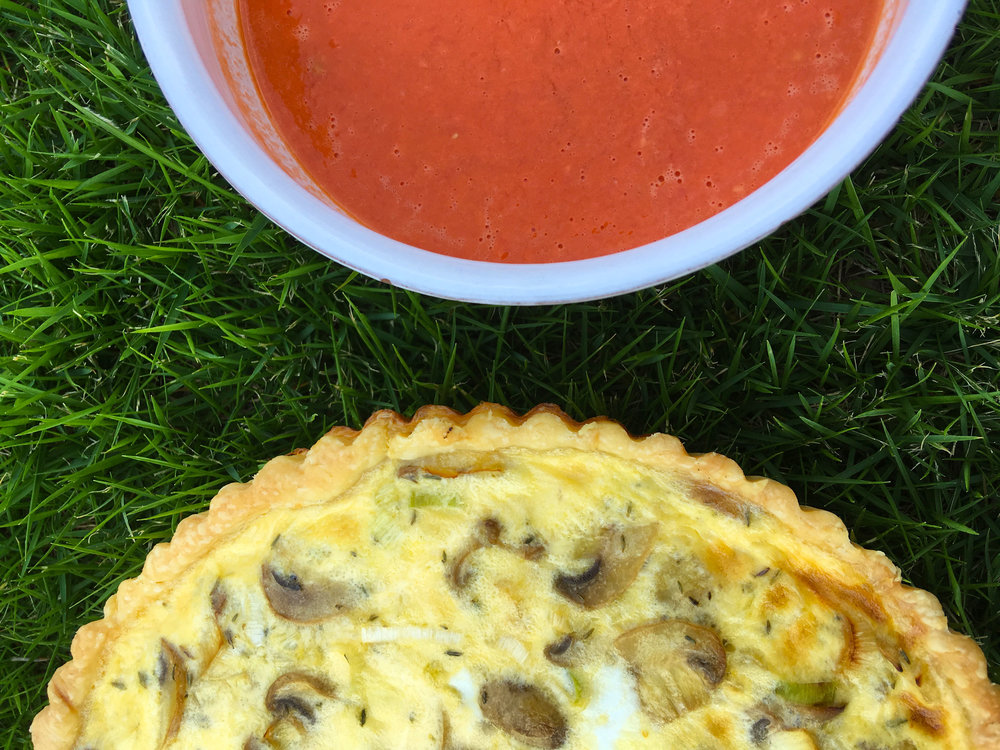
      <h3 style="color:inherit;margin:1.414em 0 .5em;font-weight:400;line-height:1.25em;font-size:1.9993959999999997em;mso-line-height-alt:1.9993959999999997em;margin-top:0;font-family:Palatino, Palladio, Baskerville, 'Nimbus Roman No9 L', Garamond, 'Century Schoolbook', serif;letter-spacing:0em;text-align:center;"><strong>Cold Soup and Hot Quiche</strong></h3><p class="" style="color:inherit;margin-bottom:1.25em;font-size:1em;line-height:1.618em;font-weight:normal;font-family:Palatino, Palladio, Baskerville, 'Nimbus Roman No9 L', Garamond, 'Century Schoolbook', serif;">This pairing is an exercise in the virtues of distinctions-in-proximity. Dump the cold soup over the quiche and you have a lukewarm sauce—not very good. Break up the quiche and drop bits into the soup—soggy croutons. But set a slice of quiche freshly out of the oven on a plate and a chilled bowl of soup by its side, and then go back and forth between the two: the result will be a pair of already delicious dishes made even more marvelous by their juxtaposition.</p><p class="" style="color:inherit;margin-bottom:1.25em;font-size:1em;line-height:1.618em;font-weight:normal;font-family:Palatino, Palladio, Baskerville, 'Nimbus Roman No9 L', Garamond, 'Century Schoolbook', serif;">Kind of like Leviticus and the gospel.</p><h4 style="color:inherit;margin:1.414em 0 .5em;font-weight:400;line-height:1.25em;font-size:1.414em;mso-line-height-alt:1.414em;font-family:Palatino, Palladio, Baskerville, 'Nimbus Roman No9 L', Garamond, 'Century Schoolbook', serif;letter-spacing:.02em;text-align:center;"><em>Cold Raw Tomato Soup</em></h4><p class="" style="color:inherit;margin-bottom:1.25em;font-size:1em;line-height:1.618em;font-weight:normal;font-family:Palatino, Palladio, Baskerville, 'Nimbus Roman No9 L', Garamond, 'Century Schoolbook', serif;">2 lbs. very ripe tomatoes<br>2 garlic cloves, minced<br>⅓ c. homemade chicken broth (e.g. from the bones of a chicken breast or leftover rotisserie; you will be sorely disappointed if you use store-bought)<br>⅓ c. extra-virgin olive oil<br>3 Tbsp. red wine vinegar<br>¾ tsp. salt&nbsp;</p><p class="" style="color:inherit;margin-bottom:1.25em;font-size:1em;line-height:1.618em;font-weight:normal;font-family:Palatino, Palladio, Baskerville, 'Nimbus Roman No9 L', Garamond, 'Century Schoolbook', serif;">Bring a small pot of water to a boil. Dunk the tomatoes one at a time for about 25 seconds on each side, then lift out with a slotted spoon. When they’ve had a moment to cool, pull off the skins and cut out the core. Chop the tomatoes in large chunks and put in a blender (or a deep bowl if you’re using an immersion blender). Add all the remaining ingredients and blend till very smooth. Chill at least 3 hours before serving.</p><h4 style="color:inherit;margin:1.414em 0 .5em;font-weight:400;line-height:1.25em;font-size:1.414em;mso-line-height-alt:1.414em;font-family:Palatino, Palladio, Baskerville, 'Nimbus Roman No9 L', Garamond, 'Century Schoolbook', serif;letter-spacing:.02em;text-align:center;"><em>Leek and Mushroom Quiche</em></h4><p class="" style="color:inherit;margin-bottom:1.25em;font-size:1em;line-height:1.618em;font-weight:normal;font-family:Palatino, Palladio, Baskerville, 'Nimbus Roman No9 L', Garamond, 'Century Schoolbook', serif;">I use a 9” tart tin to make this. You could use a pie plate instead, with a slight sacrifice in crispness of crust.</p><p class="" style="color:inherit;margin-bottom:1.25em;font-size:1em;line-height:1.618em;font-weight:normal;font-family:Palatino, Palladio, Baskerville, 'Nimbus Roman No9 L', Garamond, 'Century Schoolbook', serif;"><em>for the crust:<br></em>1¼ c. flour<br>¼ tsp. salt<br>7 Tbsp. unsalted butter<br>3 Tbsp. ice water (from a glass filled with water and a handful of ice cubes)&nbsp;</p><p class="" style="color:inherit;margin-bottom:1.25em;font-size:1em;line-height:1.618em;font-weight:normal;font-family:Palatino, Palladio, Baskerville, 'Nimbus Roman No9 L', Garamond, 'Century Schoolbook', serif;">Put the flour in a food processor and sprinkle over the salt and pulse. Cut the butter into ½” cubes and scatter over the flour. Pulse until the mixture looks fairly homogenous and a bit sandy. Sprinkle 2 Tbsp. of the water over the mixture and pulse again, then add the third Tbsp. Pulse repeatedly until the dough comes together. You may be tempted to lose faith and add more water, but resist the urge. Just keep pulsing. Pull out the dough ball, wrap it in plastic, flatten slightly to make a thick disk, and set in the fridge for at least two hours.</p><p class="" style="color:inherit;margin-bottom:1.25em;font-size:1em;line-height:1.618em;font-weight:normal;font-family:Palatino, Palladio, Baskerville, 'Nimbus Roman No9 L', Garamond, 'Century Schoolbook', serif;">Now remove the dough from the fridge and let it sit at room temperature until just pliable enough to work with. Preheat the oven to 375°F. Flour your counter and roll the dough into a circle. When it looks larger than the bottom of the quiche tin, set the tin lightly over top of it and eyeball how much more you need to bring the crust up the sides. Finish rolling, fold the dough in quarters, and set it in the tin. Gently press the bottom into place, then squish down the outer edges to fill up the sides with an evenly thick border all around. If anything hangs over you can remove it quickly by running the rolling pin over it. Eat the trimmings raw when no one’s looking. If the dough is very soft, stick in the freezer for 10 minutes before proceeding. Cover the dough with a layer of foil and fill it with pie weights or, failing that, a pound of dried beans that have been languishing in the back of your pantry, which after this will be permanently downgraded to the status of pie weights (you will definitely not want to try to cook and eat them). Bake for 25 minutes. Remove the pie weights by lifting the edges of the foil up gently.</p><p class="" style="color:inherit;margin-bottom:1.25em;font-size:1em;line-height:1.618em;font-weight:normal;font-family:Palatino, Palladio, Baskerville, 'Nimbus Roman No9 L', Garamond, 'Century Schoolbook', serif;"><em>for the filling:<br></em>1 leek, roots and dark green end trimmed, well washed<br>½ lb. mushrooms (more than one variety is nice)<br>2 tsp. extra-virgin olive oil<br>½ tsp. thyme<br>½ tsp. salt<br>¾ c. whole milk<br>¼ c. heavy cream<br>2 eggs&nbsp;</p><p class="" style="color:inherit;margin-bottom:1.25em;font-size:1em;line-height:1.618em;font-weight:normal;font-family:Palatino, Palladio, Baskerville, 'Nimbus Roman No9 L', Garamond, 'Century Schoolbook', serif;">While the crust is baking, slice the leeks and mushrooms thinly. Heat 1 tsp. oil in a frying pan and sauté the leeks until just softened and starting to brown. Remove and set aside. Repeat with the second tsp. oil and the mushrooms. Mix the mushrooms with the leeks, and stir in the thyme and salt. In another bowl, combine the milk, cream, and eggs, and beat thoroughly until the ropy bits of egg white are mostly subdued.</p><p class="" style="color:inherit;font-size:1em;line-height:1.618em;font-weight:normal;margin-bottom:0;font-family:Palatino, Palladio, Baskerville, 'Nimbus Roman No9 L', Garamond, 'Century Schoolbook', serif;">When the crust comes out of the oven, turn the heat up to 400°F. Spread the leek-mushroom mixture evenly over the cooked crust. Set it on the rack in the middle of your oven and pour in the custard, holding back at the end if there’s risk of overflow. Bake for 15 minutes or until puffy and browned on top. Let sit about 10 minutes for the custard to stabilize before serving.</p>
    </td>
  </tr>
</tbody></table>

</div>
<div id="text-text-section-7">
<table border="0" cellpadding="0" cellspacing="0" width="100%" bgcolor="#FFFFFF" class="text-section section-content" style="border-collapse:collapse;border-spacing:0 !important;border-color:transparent;mso-table-lspace:0pt;mso-table-rspace:0pt;min-width:100%;width:100%;">
  <tbody><tr>
    <td valign="top" class="section-text-area section-content-cell" style="border-collapse:collapse;border-spacing:0 !important;border-color:transparent;mso-table-lspace:0pt;mso-table-rspace:0pt;padding-top:22px;padding-right:22px;padding-bottom:22px;padding-left:22px;color:#000;background-color:#fff;">
      <h3 style="color:inherit;margin:1.414em 0 .5em;font-weight:400;line-height:1.25em;font-size:1.9993959999999997em;mso-line-height-alt:1.9993959999999997em;margin-top:0;font-family:Palatino, Palladio, Baskerville, 'Nimbus Roman No9 L', Garamond, 'Century Schoolbook', serif;letter-spacing:0em;text-align:center;"><strong>Feed Me More!</strong></h3><p style="color:inherit;margin-bottom:1.25em;font-size:1em;line-height:1.618em;font-weight:normal;font-family:Palatino, Palladio, Baskerville, 'Nimbus Roman No9 L', Garamond, 'Century Schoolbook', serif;text-align:center;" class="">This essay is greatly indebted to two brilliant studies of Leviticus. The first is Mary Douglas’s <em><a href="https://tinyurl.com/y6epnrw6" rel="nofollow" style="color:#0e8ac4 !important;">Leviticus as Literature</a></em>, which brings her anthropological acumen to illuminate the consistent, insightful, and profound logic of the book of Leviticus. (The two quotations in this essay come from this book, pp. 35 and 88 respectively.)</p><p style="color:inherit;margin-bottom:1.25em;font-size:1em;line-height:1.618em;font-weight:normal;font-family:Palatino, Palladio, Baskerville, 'Nimbus Roman No9 L', Garamond, 'Century Schoolbook', serif;text-align:center;" class="">The other study is Ephraim Radner’s <em><a href="https://tinyurl.com/y4h96j2c" rel="nofollow" style="color:#0e8ac4 !important;">Leviticus</a></em> commentary in the Brazos series, in which he offers an in-depth reading of the book in the light of the gospel, and the gospel in light of Leviticus; highly recommended for anyone hoping to reclaim this much-maligned text as <em>holy</em> Scripture.</p><p style="color:inherit;margin-bottom:1.25em;font-size:1em;line-height:1.618em;font-weight:normal;font-family:Palatino, Palladio, Baskerville, 'Nimbus Roman No9 L', Garamond, 'Century Schoolbook', serif;text-align:center;" class="">You can also read my further ruminations on the topic in my article<br>“<a href="https://tinyurl.com/y3c3xcpe" rel="nofollow" style="color:#0e8ac4 !important;">Learning to Love Leviticus</a>.”</p><p style="color:inherit;margin-bottom:1.25em;font-size:1em;line-height:1.618em;font-weight:normal;font-family:Palatino, Palladio, Baskerville, 'Nimbus Roman No9 L', Garamond, 'Century Schoolbook', serif;text-align:center;" class="">Theology &amp; a Recipe comes out only quarterly, but you can feed your soul on good theology every other week by listening to the <a href="https://www.queenofthesciences.com/" rel="nofollow" style="color:#0e8ac4 !important;">Queen of the Sciences</a> podcast, hosted by me and my dad, Paul R. Hinlicky.</p><p style="color:inherit;font-size:1em;line-height:1.618em;font-weight:normal;font-family:Palatino, Palladio, Baskerville, 'Nimbus Roman No9 L', Garamond, 'Century Schoolbook', serif;text-align:center;margin-bottom:15pt;" class=""><em><strong>You’re welcome to forward this newsletter<br> to anyone you think might enjoy it!</strong></em></p><p style="color:inherit;font-size:1em;line-height:1.618em;font-weight:normal;font-family:Palatino, Palladio, Baskerville, 'Nimbus Roman No9 L', Garamond, 'Century Schoolbook', serif;text-align:center;margin-bottom:15pt;" class="">And if you’re the happy recipient,<br> please sign up for future issues at <a href="https://www.sarahhinlickywilson.com/theology/" target="" rel="nofollow noopener noreferrer" style="color:#0e8ac4 !important;">sarahhinlickywilson.com</a>!</p><p style="color:inherit;font-size:1em;line-height:1.618em;font-weight:normal;font-family:Palatino, Palladio, Baskerville, 'Nimbus Roman No9 L', Garamond, 'Century Schoolbook', serif;text-align:center;margin-bottom:0.0001pt;" class="">Send your thoughts, questions, critiques, and ideas for future topics to<br>sarah@sarahhinlickywilson.com</p>
    </td>
  </tr>
</tbody></table>

</div>
<div id="button-button-section-8">

<table border="0" cellpadding="0" cellspacing="0" bgcolor="transparent" class="button-section section-content" style="border-collapse:collapse;border-spacing:0 !important;border-color:transparent;mso-table-lspace:0pt;mso-table-rspace:0pt;min-width:100%;width:100%;background-color:transparent;">
  <tbody><tr>
    <td align="center" valign="middle" class="section-content-cell section-text-area" style="border-collapse:collapse;border-spacing:0 !important;border-color:transparent;mso-table-lspace:0pt;mso-table-rspace:0pt;padding-top:22px;padding-right:22px;padding-bottom:22px;padding-left:22px;">
      <table border="0" cellpadding="0" cellspacing="0" bgcolor="#084561" class="button-section-box" data-style="solid" style="border-spacing:0 !important;border-color:transparent;mso-table-lspace:0pt;mso-table-rspace:0pt;width:auto;border-collapse:collapse;background-color:#084561;border-radius:0px;">
        <tbody><tr>
          <td align="center" valign="middle" class="button-section-text" style="border-collapse:collapse;border-spacing:0 !important;border-color:transparent;mso-table-lspace:0pt;mso-table-rspace:0pt;text-align:center;">
            <a class="button-section-link" href="https://www.facebook.com/theologyandarecipe/" style="display:block;font-size:11px;letter-spacing:0em;text-decoration:none;color:#efefef;">
              <span class="button-section-label" style="line-height:inherit;font-family:Palatino, Palladio, Baskerville, 'Nimbus Roman No9 L', Garamond, 'Century Schoolbook', serif;letter-spacing:.2em;border-radius:0px;border-top:solid #084561 16px;border-right:solid #084561 33px;border-bottom:solid #084561 16px;border-left:solid #084561 33px;display:inline-block;font-size:inherit;font-weight:inherit;color:inherit;width:auto;margin:0;min-width:1px;">Like Theology &amp; a Recipe on Facebook!</span>
            </a>
          </td>
        </tr>
      </tbody></table>
    </td>
  </tr>
</tbody></table>

</div>
                      </td>
                    </tr>
                  </tbody></table>
                  <table border="0" cellpadding="0" cellspacing="0" width="100%" id="newsletter-section-footer" style="width:100%;border-collapse:collapse;border-spacing:0 !important;border-color:transparent;mso-table-lspace:0pt;mso-table-rspace:0pt;">
                    <tbody><tr>
                      <td align="center" valign="top" id="newsletter-section-footer-cell" style="border-collapse:collapse;border-spacing:0 !important;border-color:transparent;mso-table-lspace:0pt;mso-table-rspace:0pt;">
                        
<div id="footer-footer-section-stacked-top-0">
<table border="0" cellpadding="0" cellspacing="0" width="100%" bgcolor="#FFFFFF" class="footer-section footer-section-stacked section-content" style="border-collapse:collapse;border-spacing:0 !important;border-color:transparent;mso-table-lspace:0pt;mso-table-rspace:0pt;min-width:100%;width:100%;background-color:#fff;">
  <tbody><tr>
    <td align="center" valign="top" class="section-text-area section-content-cell" style="border-collapse:collapse;border-spacing:0 !important;border-color:transparent;mso-table-lspace:0pt;mso-table-rspace:0pt;padding-top:22px;padding-right:22px;padding-bottom:22px;padding-left:22px;">


          <p class="footer-company-info" style="line-height:1.618em;font-weight:normal;font-family:Palatino, Palladio, Baskerville, 'Nimbus Roman No9 L', Garamond, 'Century Schoolbook', serif;color:#111;font-size:11px;margin-top:11px;margin-bottom:11px;">
    <a style="color:#111;text-decoration:none;font-size:inherit;font-family:inherit;font-weight:inherit;line-height:inherit;cursor:default;">Lutheran Arts and Letters LLC, 1290 Portland Avenue, Saint Paul, MN 55104, USA</a>
</p>
        
      
        <p class="footer-company-info" style="line-height:1.618em;font-weight:normal;font-family:Palatino, Palladio, Baskerville, 'Nimbus Roman No9 L', Garamond, 'Century Schoolbook', serif;color:#111;font-size:11px;margin-top:11px;margin-bottom:11px;"><a href="#" class="unsubscribe-link" style="color:#111;font-size:inherit;font-family:inherit;font-weight:inherit;line-height:inherit;cursor:default;text-decoration:underline !important;"><span class="unsubscribe-link-text" style="font-size:inherit;font-weight:inherit;line-height:inherit;margin:0;color:#111;">Unsubscribe</span></a></p>

        
<p class="footer-badge" style="color:inherit;font-size:1em;line-height:1.618em;font-weight:normal;font-family:Palatino, Palladio, Baskerville, 'Nimbus Roman No9 L', Garamond, 'Century Schoolbook', serif;margin-top:33px;margin-bottom:44px;">
  <a href="https://www.squarespace.com?channel=product_refer&amp;subchannel=customer&amp;source=email_campaigns_button&amp;campaign=58374b5629687ff9ecf3dc40&amp;utm_medium=product_refer&amp;utm_source=email_campaigns_button" style="color:#0e8ac4 !important;">
    <img src="https://static3.squarespace.com/static/newsletters/assets/c0312745730df13cf850c433cea86ddb2c28016c/images/email/footer/powered-by.en-US.png" width="212" height="34" style="display:block;border:0;outline:none;text-decoration:none;line-height:0;font-size:0;background-color:transparent;-ms-interpolation-mode:bicubic;">
  </a>
</p>


    </td>
  </tr>
  <tr>
    <td align="center" valign="top" class="section-padded-shim" style="border-collapse:collapse;border-spacing:0 !important;border-color:transparent;mso-table-lspace:0pt;mso-table-rspace:0pt;height:0;"></td>
  </tr>
</tbody></table>

</div>
                      </td>
                    </tr>
                  </tbody></table>
                </td>
              </tr>
            </tbody></table>
          </td>
        </tr>
      </tbody></table>
    </td>
  </tr>
</tbody></table>


</body></html>